Shockwave Therapy in Vaughan for Chronic Pain Relief
Shockwave Therapy, Physiotherapy Vaughan, Chronic Pain Relief, Plantar Fasciitis, Tennis Elbow, Achilles Tendinopathy, Shoulder Pain, GoldCare Physio
Pain is usually supposed to protect us. It tells us when something is irritated, overloaded, injured, or not moving properly. But when pain continues for weeks or months, it can become more than a warning sign. It can become a daily limitation.
For many people, chronic heel pain, elbow pain, shoulder pain, Achilles pain, or tendon discomfort does not appear suddenly. It builds slowly. At first, it may only hurt in the morning, after exercise, after work, or when using a certain movement. Then it begins to stay longer, return faster, and interfere with walking, lifting, sleeping, working, or enjoying normal activities.
This is where shockwave therapy may help.
At GoldCare Physiotherapy & Rehabilitation Clinic in Vaughan, shockwave therapy is used as a non-invasive treatment option for certain chronic tendon and soft tissue conditions. It is especially helpful when pain has not improved with rest alone or when the body seems stuck in a slow healing cycle.
What Is Shockwave Therapy?
Shockwave therapy uses controlled acoustic energy waves applied directly to the painful area. These waves are delivered through a specialized handheld device and are designed to stimulate the body’s natural healing response.
The goal of shockwave therapy is not simply to hide pain. Instead, it aims to encourage tissue repair, improve local circulation, reduce sensitivity, and support better movement over time.
This makes it different from temporary pain relief methods. While medication may reduce symptoms for a short period, shockwave therapy focuses on stimulating the affected tissue so the body can respond more actively.
What Types of Pain May Shockwave Therapy Help?
Shockwave therapy is commonly used for chronic musculoskeletal pain, especially tendon and soft tissue problems. It may be helpful for conditions such as:
Plantar fasciitis
Heel pain
Achilles tendinopathy
Tennis elbow
Golfer’s elbow
Shoulder tendinopathy
Rotator cuff-related pain
Calcific shoulder tendinitis
Patellar tendon pain
Shin splints
Hip bursitis
Chronic trigger points
Persistent soft tissue pain
Many of these conditions are related to repetitive strain, poor movement mechanics, overuse, weakness, posture problems, sports activity, or long hours of standing and working.
For example, plantar fasciitis can make the first steps in the morning painful. Tennis elbow can make gripping, lifting, or typing uncomfortable. Achilles pain can affect walking, stairs, or exercise. Shoulder tendon pain can make reaching, lifting, or sleeping difficult.
Shockwave therapy may be useful when these problems become stubborn and do not respond well to basic stretching, rest, or short-term pain control.
Why Chronic Pain Needs More Than Rest
Rest can help during the early stage of an injury, but chronic pain often needs a more complete strategy. If the same area keeps becoming irritated, the real problem may involve movement habits, weakness, stiffness, poor loading, posture, footwear, repetitive work demands, or incomplete recovery.
This is why shockwave therapy should not be viewed as a standalone solution. It works best when it is part of a full physiotherapy plan.
At GoldCare Physio, treatment may include shockwave therapy, manual therapy, therapeutic exercise, mobility training, strengthening, posture correction, stretching, education, and home care guidance. The goal is to reduce pain while also improving the reason the pain started or continued.
What Happens During a Shockwave Therapy Session?
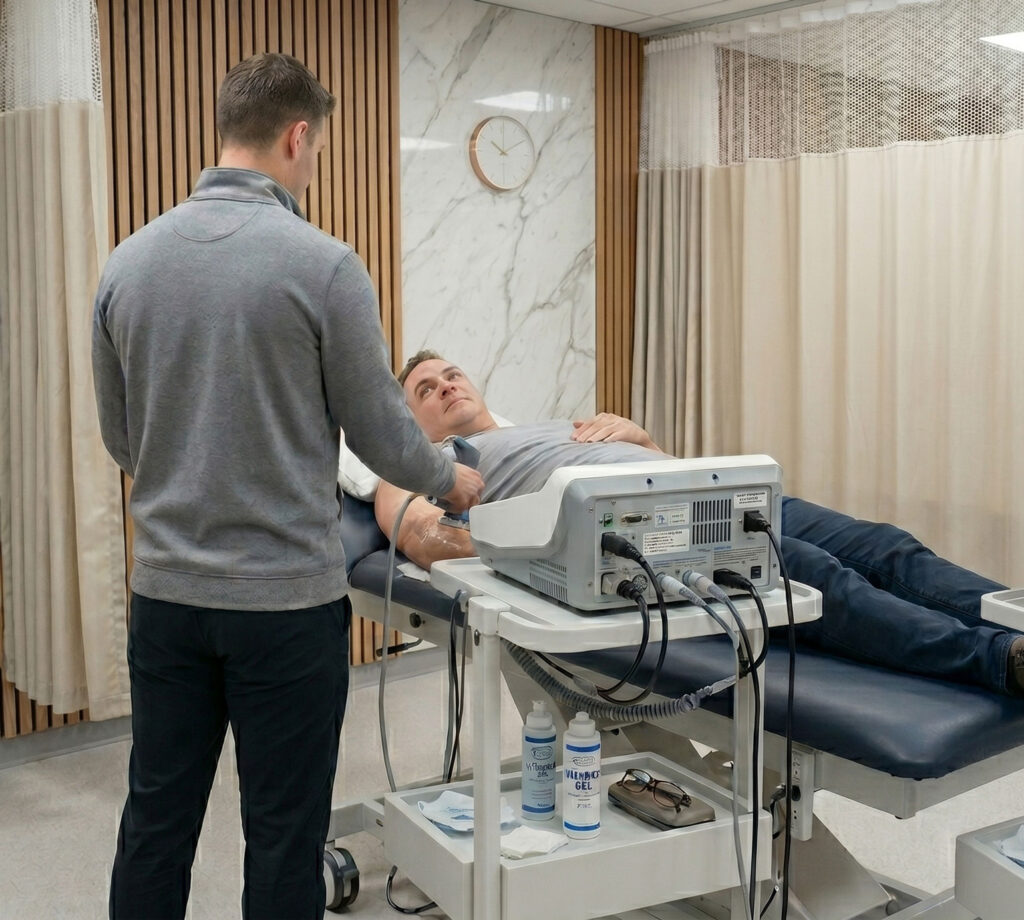
A shockwave therapy session is usually simple and non-invasive. Your physiotherapist first identifies the treatment area based on your assessment and symptoms. A gel may be applied to help transmit the acoustic waves properly. Then the device is placed on the painful or restricted area.
During treatment, you may feel tapping, pulsing, pressure, or temporary discomfort. The intensity can often be adjusted based on your comfort level and treatment goals.
Some patients feel relief quickly, while others notice gradual improvement over several sessions. Mild soreness after treatment can happen, but it is usually temporary. Your therapist will explain what to expect and what activities you should avoid after treatment.
Can Shockwave Therapy Reduce the Need for Pain Medication?
For some patients, shockwave therapy may help reduce reliance on temporary pain relief methods by addressing the irritated tissue more directly. However, every patient is different. The best approach depends on your condition, pain level, health history, and treatment response.
GoldCare’s focus is always safe, personalized care. Before recommending shockwave therapy, our team assesses whether it is appropriate for your specific condition.
Who Should Consider Shockwave Therapy?
You may want to book a shockwave therapy consultation if you have pain that has lasted for several weeks, keeps returning after activity, affects walking or lifting, limits exercise, interrupts sleep, or has not improved with basic care.
Shockwave therapy may be especially useful for people with chronic tendon pain, plantar fasciitis, tennis elbow, Achilles pain, and shoulder tendon irritation.
GoldCare’s Approach to Shockwave Therapy in Vaughan
At GoldCare Physiotherapy & Rehabilitation Clinic, we do not treat pain as an isolated symptom. We look at your movement, strength, flexibility, posture, lifestyle, work demands, and recovery goals.
If shockwave therapy is suitable for you, we build it into a personalized rehabilitation plan designed to help you recover safely and move with more confidence.
GoldCare Physiotherapy & Rehabilitation Clinic
7777 Weston Rd, Unit 108
Woodbridge, ON L4L 0G9
Phone: +1 (905) 608-5000
Email: info@goldcarephysio.ca
Book your appointment today and take the next step toward better movement, less pain, and stronger recovery.