Shockwave therapy is a non-invasive treatment option that may help people dealing with persistent tendon pain, soft tissue discomfort, and certain overuse injuries. When pain continues for weeks or months, everyday activities such as walking, lifting, reaching, exercising, or standing for long periods can become increasingly difficult.
At GoldCare Physiotherapy & Rehabilitation Clinic, shockwave therapy can be incorporated into a personalized rehabilitation plan when appropriate. Rather than focusing only on short-term discomfort, treatment may be combined with physiotherapy, strengthening, mobility work, stretching, education, and gradual activity progression to support better movement and function.
What Is Shockwave Therapy?
Shockwave Therapy is a non-invasive treatment that uses acoustic wave energy to stimulate the body’s natural healing response in targeted areas. It is commonly used for chronic tendon and soft tissue conditions, especially when pain has lasted for a long time or has not responded well enough to rest, stretching, exercise, or other conservative treatments.
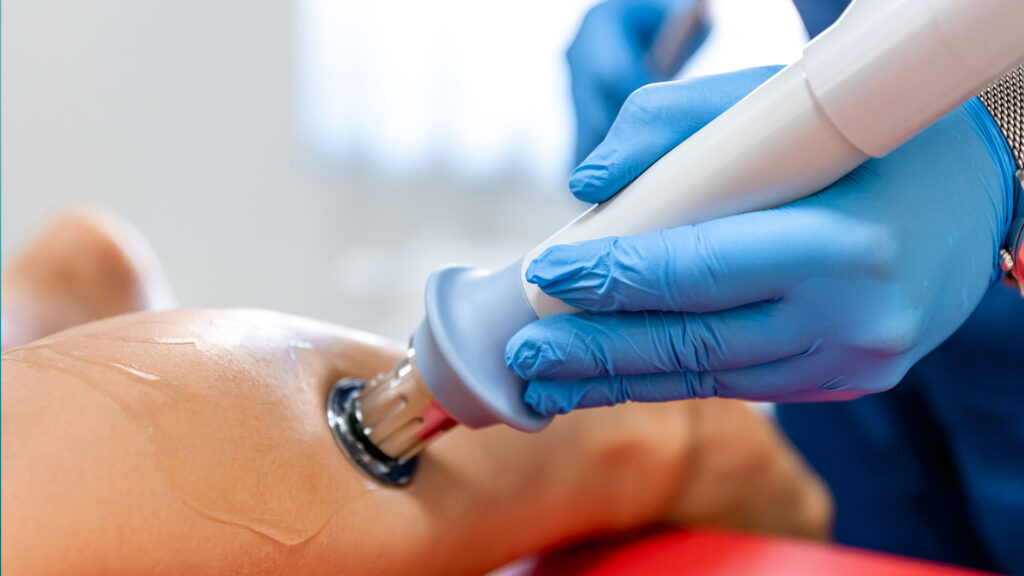
Unlike surgery or injections, Shockwave Therapy does not require incisions. The treatment is applied externally over the affected area using a specialized device. The acoustic waves are directed into the tissue to help encourage circulation, tissue response, and recovery activity in the targeted region.
Because every patient’s condition is different, Shockwave Therapy should be recommended after an assessment. At GoldCare, the treatment may be included when it fits the patient’s symptoms, goals, and rehabilitation plan.
Conditions Shockwave Therapy May Support
Shockwave Therapy may be helpful for several chronic tendon and soft tissue concerns. It is often considered when discomfort has continued for a long period or keeps returning during activity.
Common conditions that may benefit from Shockwave Therapy include:
- Plantar fasciitis
- Heel pain
- Tennis elbow
- Achilles tendinopathy
- Shoulder tendinopathy
- Rotator cuff-related pain
- Chronic tendon irritation
- Persistent soft tissue pain
- Certain overuse injuries
- Repetitive strain discomfort
For example, someone with plantar fasciitis may feel sharp heel pain during the first steps in the morning. Someone with tennis elbow may feel pain while gripping, lifting, typing, or using tools. A patient with Achilles tendinopathy may feel stiffness or discomfort when walking, running, or climbing stairs. These conditions can affect daily life, work, fitness, and independence if they are not managed properly.
Why Chronic Tendon Pain Needs a Complete Plan
Chronic tendon pain is often more complex than simple soreness. Tendons can become irritated because of repetitive strain, poor movement mechanics, weakness, sudden increases in activity, poor footwear, posture issues, or lack of proper recovery time. If only the pain is addressed, the problem may return once the person resumes normal activity.
That is why Shockwave Therapy is often most effective when it is not used alone. At GoldCare, it may be combined with physiotherapy exercises, strengthening, mobility work, stretching, education, and guided progression. This helps address both the painful area and the movement patterns that may be contributing to the condition.
A complete rehabilitation plan may help patients understand what caused the problem, how to reduce unnecessary strain, and how to rebuild tolerance safely.
How Shockwave Therapy Fits Into Physiotherapy
Shockwave Therapy can support the treatment process, but physiotherapy helps guide the bigger recovery picture. During physiotherapy, the clinician may assess strength, flexibility, posture, mobility, balance, movement control, and activity demands. This helps create a treatment plan that is specific to the patient’s body and lifestyle.
For example, a patient with Achilles tendon pain may need calf strengthening, ankle mobility work, gradual loading, and activity modification. A patient with shoulder tendinopathy may need rotator cuff strengthening, posture support, shoulder mobility exercises, and education on safer lifting or reaching movements.
Shockwave Therapy may help stimulate the treatment area, while physiotherapy helps rebuild function. Together, they can support a more complete and longer-term recovery experience.
What Patients Can Expect
Before beginning Shockwave Therapy, a proper assessment is important. The clinician needs to understand where the pain is located, how long it has been present, what activities make it worse, and whether Shockwave Therapy is appropriate.
During the session, the treatment is applied directly over the targeted area. Some patients may feel mild discomfort during treatment, especially if the area is already sensitive. However, the intensity can usually be adjusted based on comfort and tolerance.
After the session, the clinician may provide guidance about activity, exercise, stretching, or temporary modifications. Since chronic tendon and soft tissue conditions often require progressive care, patients may need multiple sessions along with an active rehabilitation plan.
Shockwave Therapy for Plantar Fasciitis and Heel Pain
Plantar fasciitis and heel pain are among the common reasons patients seek Shockwave Therapy. Heel pain can make walking uncomfortable, especially in the morning or after long periods of standing. Many people try changing shoes, resting, stretching, or using home remedies, but the pain may continue if the tissue remains irritated.
Shockwave Therapy may help support the healing response in the affected soft tissue. When combined with physiotherapy, treatment may also include calf stretching, foot strengthening, ankle mobility, gait education, and advice on footwear or activity levels.
The goal is to reduce irritation, improve tolerance, and help the patient walk with more comfort and confidence.
Shockwave Therapy for Tennis Elbow and Overuse Injuries
Tennis elbow is not limited to tennis players. It can affect office workers, tradespeople, athletes, parents, and anyone who repeatedly grips, lifts, twists, or uses the wrist and forearm. Pain may appear on the outside of the elbow and can make daily tasks difficult.
Shockwave Therapy may support chronic tendon irritation in the elbow. However, long-term improvement often requires strengthening, load management, wrist and forearm exercises, and education about repetitive movement habits.
This is why GoldCare focuses on combining treatment with practical rehabilitation, not just short-term relief.
Take the Next Step Toward Recovery
If you have been dealing with chronic tendon pain, heel pain, shoulder discomfort, tennis elbow, Achilles pain, or a soft tissue condition that keeps returning, Shockwave Therapy may be worth considering. The right treatment plan can help you understand the cause of your discomfort and support a safer, more structured recovery.
At GoldCare Physiotherapy, Shockwave Therapy is offered as part of a patient-centered rehabilitation approach. With physiotherapy exercises, mobility work, strengthening, education, and guided progression, your care plan can be built around your condition, comfort, and recovery goals.
Do not let chronic pain limit your movement, work, or daily life. Book an appointment with GoldCare Physiotherapy and take the next step toward better comfort, stronger function, and long-term recovery.